Dear Friends-
Last night it rained, a serious, no-nonsense rain, thrumming against the windows and glugging in the downspouts. There was no mistaking it for summer’s passing showers.  This was an earnest rain, autumn’s first full-throated announcement.
This wet morning, I walked the dogs through a different world: same trail, new palette. The ponderosa trunks were rain-black. The broad-bladed grasses lay silvered and flattened. Along the trail, lacy blue clusters of elderberries dripped bright drops, and rosehips, the waxy red of a child’s crayon, presented themselves for the picking. The grasshoppers, which yesterday had scattered before the dogs like sparks struck from flint, had disappeared entirely. Instead, crows cawed overhead and a lone doe raised a wary neck as we passed.
What is it about the change of seasons that is so exhilarating? Why does the crispness in the air send that little hopeful frisson shivering through me? I’m not even clear about what I’m hopeful for, or if hope is the right word. But this morning each rain-glazed leaf seems intricately beautiful (as, surely, it always has been, had I eyes to see) and everything – including me – seems on the verge of becoming more deeply itself.
It’s a funny thing: this idea of becoming more deeply oneself. How can you be more –well, you?
There’s a complexity at the heart of this question; some sense that we are not yet all we are meant to be. In the faith tradition in which I was raised, this tension is called the “Already/Not-yet.” It holds that by virtue of being alive, we already participate in the divine. And yet, at the same time, our participation has not yet come into fullness. In essence, we are and are becoming.
I think it was this idea that I caught sight of while walking among the rain-sharpened colors this morning, as if somehow this daily walk had, overnight, closed the space between what is and what is possible. As the dogs furrowed among wet foxtail and timothy, the distance between the Already and Not Yet seemed diminished. That deeper, truer version of being shimmered almost everywhere.
Peace,
Lindsay
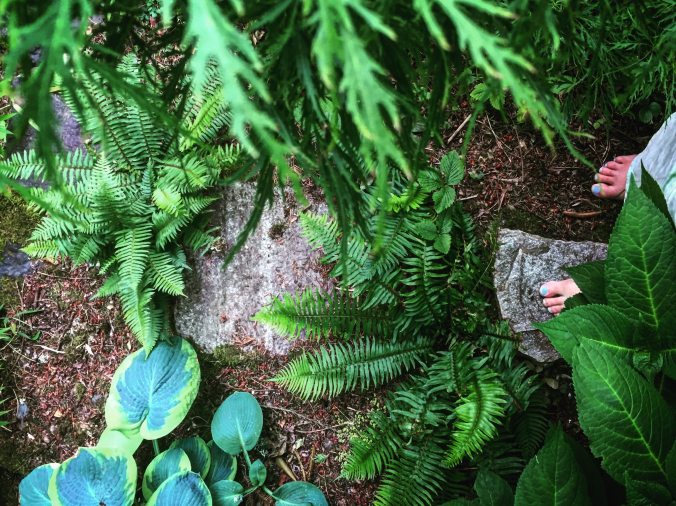
 I wondered at the time if those words came straight from the liturgy of the Greek Orthodox Church, to which the family belonged; for each word seemed to me to bear mysterious promise–like the perennials in Nancy’s garden. We look for the eternal spring. Those are the two things I remember from that season following her death: the silence of working in her garden, and the simple goodness of her husband’s graveside words. Not gaudy or extraneous or saccharine, those words bound up pain and longing and faith at once, and I have carried them with me ever since.
 As a writer, I care passionately about words. As my church’s artist-in-residence, I share prayers and mediations with congregants, choosing words with painstaking care, knowing that what comes out of my mouth has the power to comfort and deepen or distract and harm. As a mother of three girls from elementary to high school, I am a vigilant moderator of words. Just yesterday, I took my eleven-year old aside for the umpeenth time, locked my eyes with hers, and said, “You may not say hate anymore.”
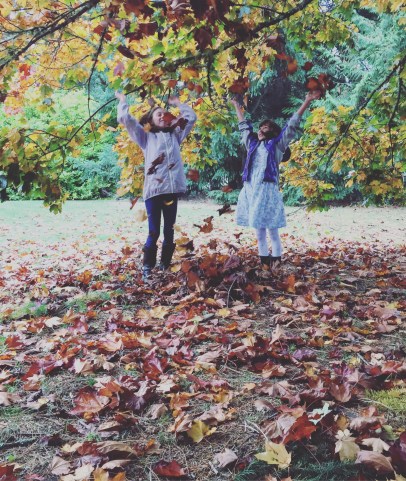 So this week, may you be enfolded by transforming goodness, and may you have the courage to open your arms to others and to speak in wonder and love.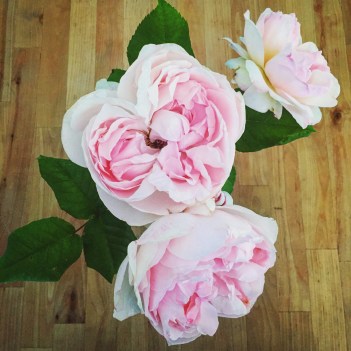
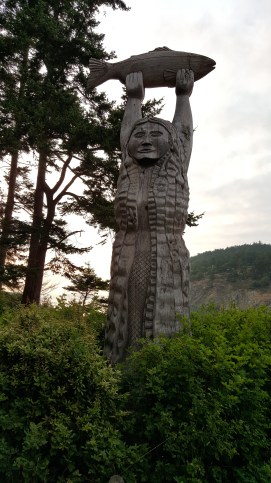 High on the cliffs of Rosario Point above Puget Sound, Ko-Kwal-alwoot stretches out strong arms to hold a salmon against the sky. Her
 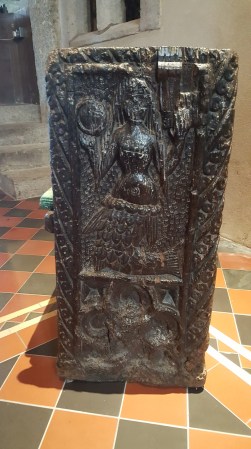 In Cornwall the rugged coastal trail winds into the tiny village of Zennor, where 6th Century Christians established the St. Senara church. Past needlepoint kneelers an ancient wooden chair depicts a mermaid lifting her bare arms.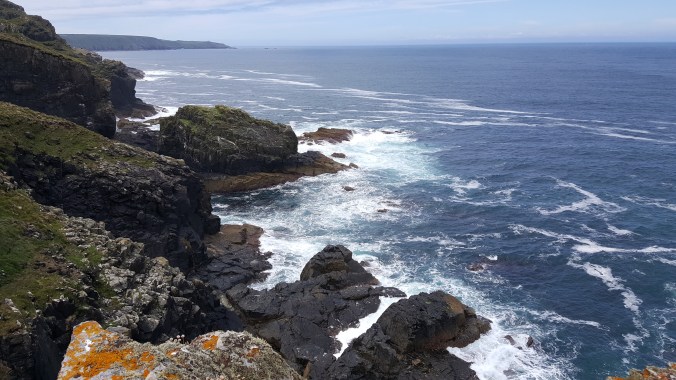
 Each Holy Hour